One Year of IPPNW Bike Tour 2023!
After I had finished the gruelling KhardungLa Challenge Ultramarathon, I backpacked to Ladakh. I drove to a far-flung village for the much-needed recovery. It was the middle of September, and winters were about to set in in this part of the world. After driving for almost 4-5 hours, I reached a place which had some grazing grounds. I settled for the one which had a small rivulet running through it in a zigzag way. The surroundings were all silent except for the melodious sound of the flowing water. The naked, snow-clad mountains on either side were striking a great contrast to the landscape.

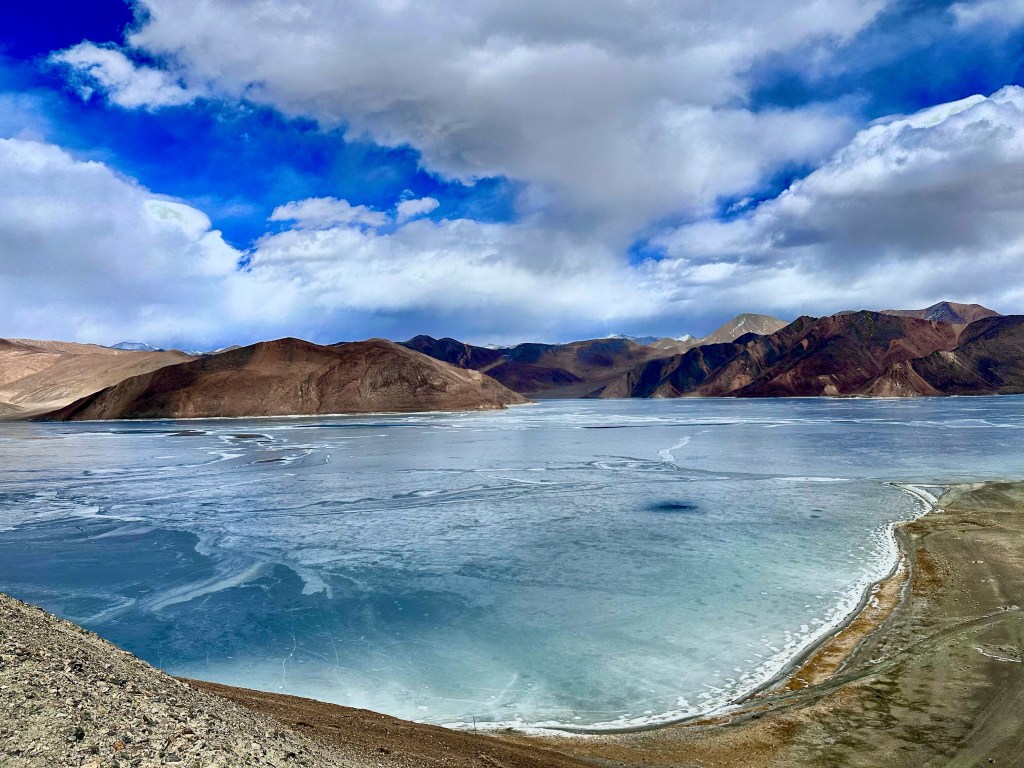
It was a bright sunny day. I settled myself and started sipping the Darjeeling tea which I brought with me. I soaked myself in the sun, and the Titan God started to heal me from inside. I was drowned in that moment and went into a trance. But it was short-lived. I was brought back to reality by an old man who was passing by on a bicycle. He was probably around 50 with a white beard and grey hair. The deep suntan was all over his cheeks, the only part not covered by his beard. He also saw me and stopped. He was riding a Trek Roscoe 6 Waterloo blue. A pair of fully loaded pannier was attached to either side of the rear tyre. He was Richard from Canada. He was on a solo trip from Manali to Leh. It was a treacherous road journey covering over 400 km. This route includes four mountain passes (called La locally): Rohtang la, Baralacha la, Lungalacha la, and Tanglang la. Tanglang la is the highest at 17,480 ft. It is a great test of human endurance and willpower. He had covered the distance in 11 days. After staying in Leh for 2-3 days, he is now cycling down to Pangong Tso Lake, the highest brackish water lake in the region. We immediately struck a chord, and I offered him a cup of tea.
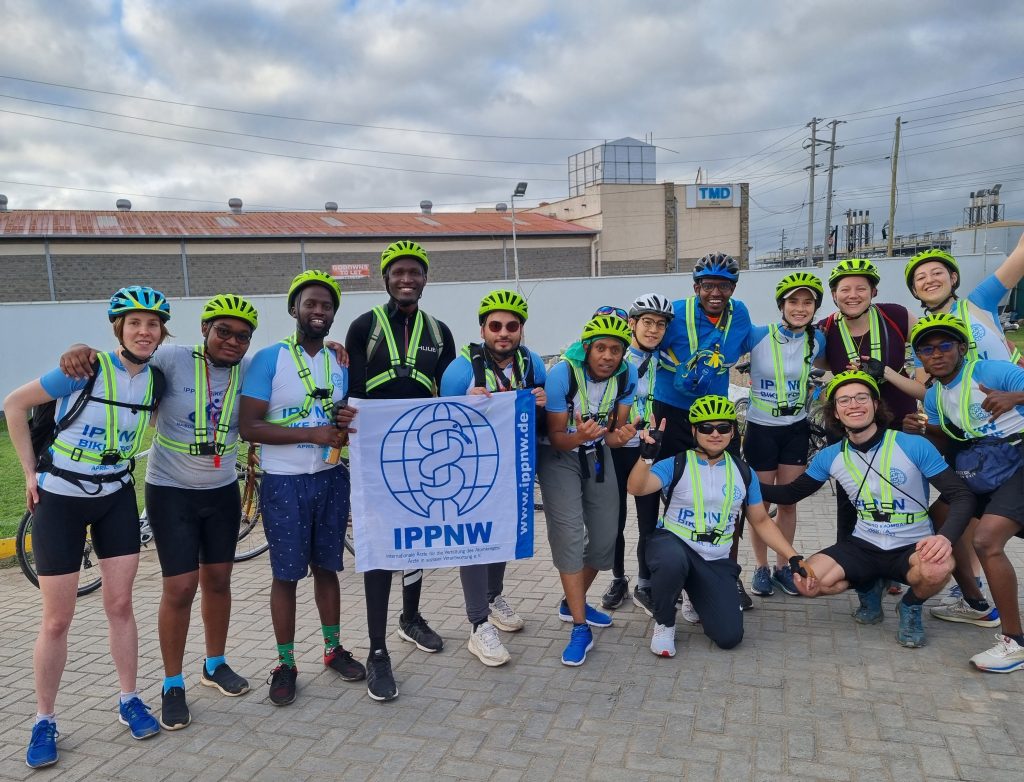
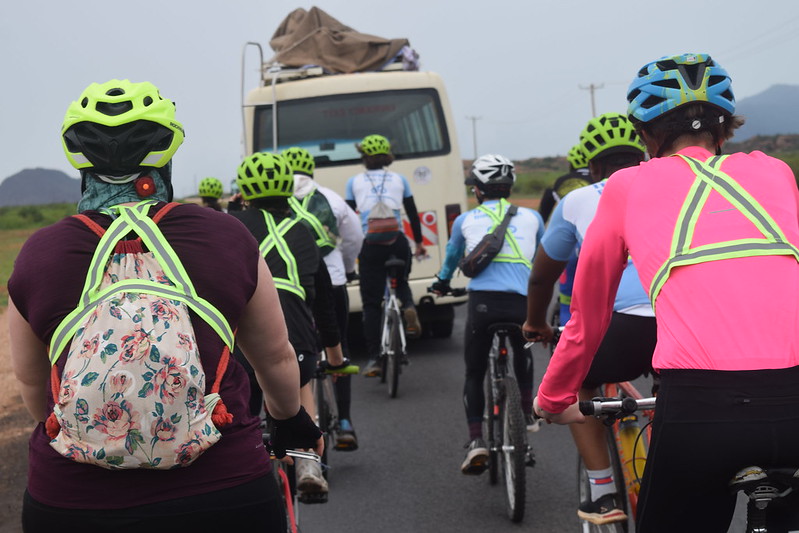
As we sipped tea I told him about the IPPNW Bike Tour in Kenya. He could easily relate to us riding with the butt sores, nasty falls, headwinds and the upslopes. But he was awestruck to know that we completed the journey of 500 km over five days with no previous team experience. He was amazed to know that we had participants from Austria, France, Germany, India, Japan, Kenya, Nepal, and Nigeria. They were 25–35 years old, with a pre-tour fitness level anywhere between 4–8 on a scale of 1–10. Though we had experienced riders who had previously participated in similar tours but also others who were taking their first bike tour. There were people who had not ridden a bike in 10 years and others who commuted on bikes every day. Many had prepared well for the expedition with cycling training of up to 70 kilometers each day.
Bike Tour Journal:



As we finished our tea, the breeze began to pick up momentum. The increasing wind signaled Richard. It was time for him to start moving towards the destination before it became too windy. By sunset, he would be along the banks of the mesmerising Pangong Tso.
He started to move and said, “With such a diverse background in terms of fitness, experience, and preparedness, it was indeed a miracle you guys have done by completing this bike tour! See you soon!” I acknowledged with a smile and said goodbye!
He started moving towards his destination, and the cranking sounds of his pedals started to fade away. He disappeared from sight, dangling on his bike. I began to wonder just how hard our ride had really been. How much distance a day is difficult or challenging in cycling parlance?
Some Numbers!
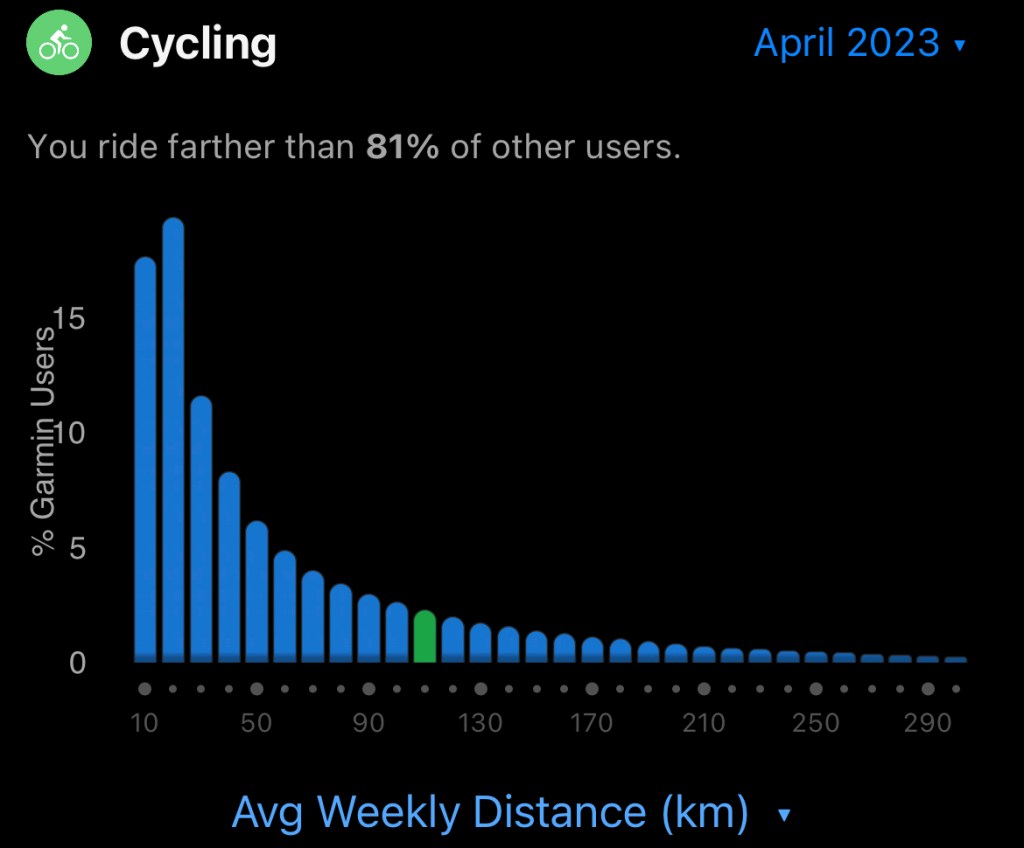
There are numerous factors at play, such as individual indulgence, cycling culture, and the surroundings. The professional cyclists competing in the Tour de France ride over 100 miles per day. They pedal at speeds greater than 50 mph. Most people who ride bicycles to and from work or for pleasure travel short distances. They usually cover no more than 20–30 kilometers a day. In most Europrean countries, the cycling conditions are favorable. They have designated bike lanes and pleasant weather conditions. These factors encourage more people to cycle. However, in most Asian and African countries, it is the opposite.

So how did we do it?
We understood our limitations and adapted to the conditions very well. We motivated each other, pushed the slower ones, waited for everyone if needed, and ensured no one was left behind. It was sheer will and determination and a common cause that pushed and let everyone, in the end, finish the cycling with flying colors. We made the journey easier by cracking jokes, listening to the music, eating fruits together, and taking breaks whenever needed. Everyone finished the day tired, but always with a smile on their face. No matter how exhausted we were, we looked forward to meeting each other at dinner. We enjoyed the meal and planned for the next day, negotiating timings for not-so-early rides (we literally woke up at 3AM every day) and listening to each other’s stories. Then the next day, we resisted the temptation to not look at the gate of the Air Conditioned bus. It looked like a doorway to heaven, which had delicacies like apples, bananas, and other eatables. We completed the distances without major injuries except for one cyclist banging into a standing truck and another one falling literally at zero speed. It was, in fact, a herculean task to steer a group of cyclists from different countries to cycle in another country for 100 km every day, with no previous team experience.
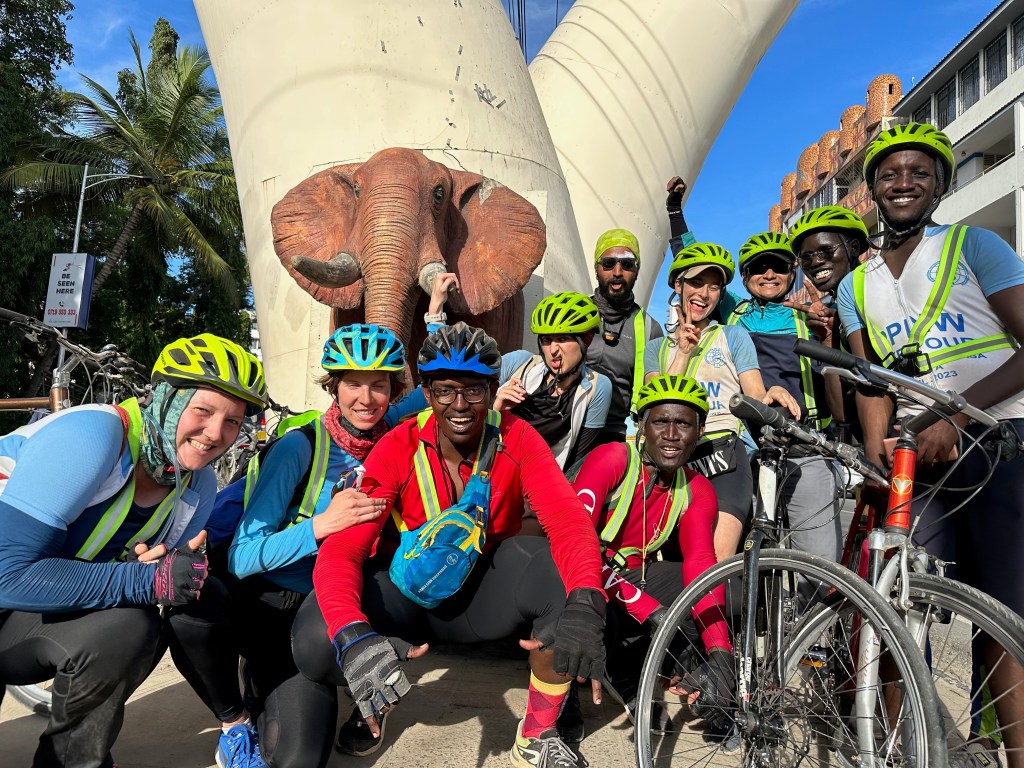
We faced high headwinds, passed through national parks, faced angry Elephants, had Zebras cross us, and fed Giraffes. It was a whole wildlife safari on a bicycle, which we covered over 5 days. We had flat tires, angry, exhausted cyclists, chain breaks, ugly accidents, and gruelling sun. We faced all these odds and finally reached Mombasa safe and sound.
“How does the human do things which at the outset look so impossible? It is the resilience of Richard which helped him cross passes as high as 17,000ft and the cause for world peace which navigated young IPPNW doctors to steer through the rough roads!“
Acknowledgements:
- Thanks to Bimal and Simon for the photographs used in the whole bike tour series.
- Learn more about IPPNW.
- The bike tour report by Bimal Khadka can be read here.
Read other chapters in the series:



 NIKOMEN!
Leave a reply to Champs-Élysées! – 0.5 – NIKOMEN! Cancel reply